

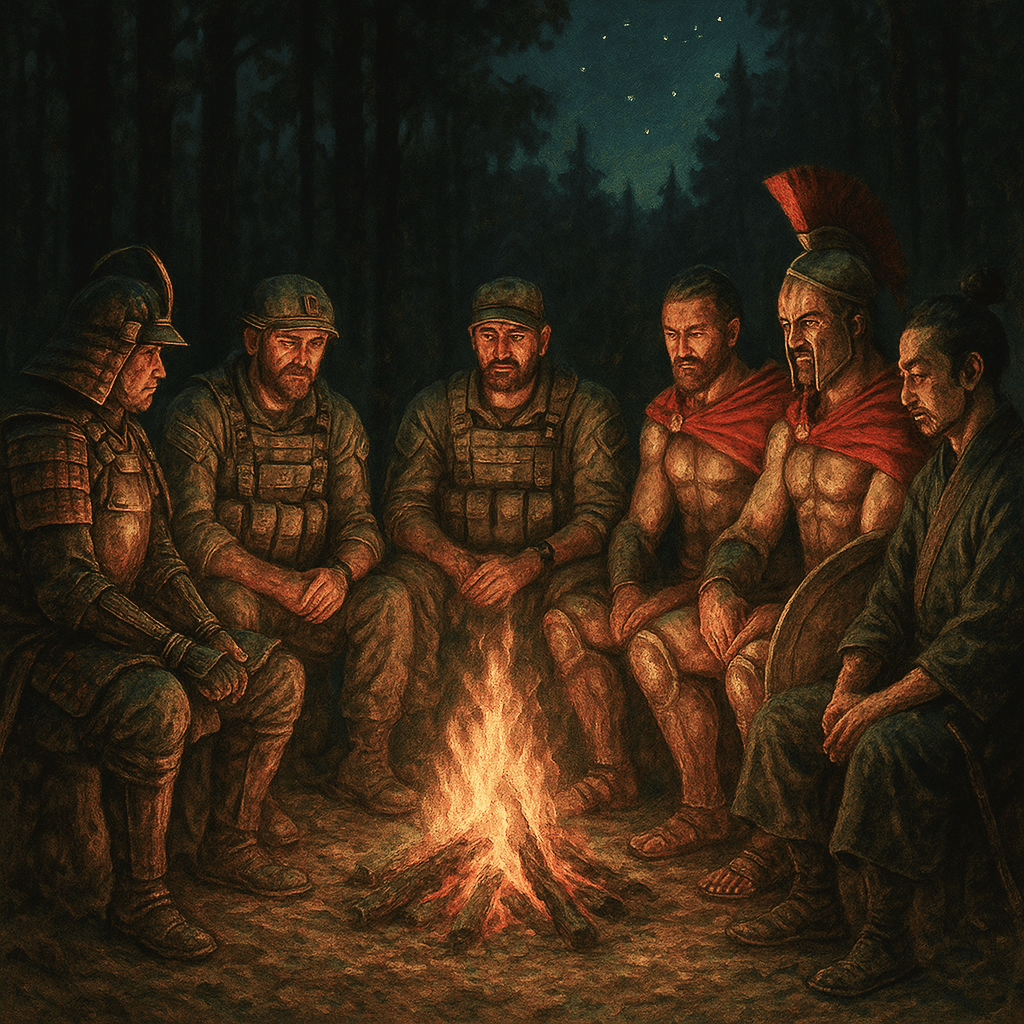
The battlefield scars us, but it also shapes us. For combat veterans, leaving the military feels like stepping into a foreign land—without the tribe, the mission, or the clarity of purpose that defined our service. In my own journey through PTSD, I found myself adrift, a warrior without a home, until I discovered Post-Traumatic Growth and a new path of service. Reflecting on ancient warrior cultures—Spartans, Samurai, Ronin, Vikings, Shaolin Monks, Stoics, and strategists like Sun Tzu and Miyamoto Musashi—I’ve come to see the modern combat veteran as most akin to the Ronin, the masterless Samurai of feudal Japan. Like the Ronin, we navigate isolation, repurpose our skills, and seek meaning in a world that doesn’t always understand us. By drawing on the wisdom of other warrior traditions, we can transform our struggles into thriving service, forging a legacy beyond the battlefield.
The Ronin’s Path: A Mirror for the Combat Veteran
In feudal Japan, Ronin were Samurai without a lord, cast adrift by fate—be it their master’s death or their own disgrace. Stripped of clan and purpose, they wandered as outsiders, relying on their swordsmanship to survive as mercenaries, teachers, or hermits. Their lives were marked by isolation, adaptability, and a relentless search for meaning. For combat veterans, this resonates deeply.
Leaving the military is like losing a tribe. The camaraderie of brothers-in-arms, the rhythm of missions, the shared weight of sacrifice—it all vanishes. In my own transition, I grappled with PTSD, feeling unmoored in a civilian world that couldn’t grasp the intensity of combat or the void left by my departed “lord”—the military. Like a Ronin, I was skilled, battle-hardened, but masterless, surrounded by people who saw me as an enigma. Some veterans retreat into reclusion, their hearts heavy with unspoken truths. Others, like me, find a bridge in government contracting, where the skills of war remain relevant, and fellow “Ronin” gather—veterans who understand the unspoken language of service.
The Ronin’s journey mirrors our own because it’s not just about survival—it’s about redefining purpose. Where other warrior cultures offer lessons, the Ronin’s struggle is uniquely ours:
• Spartans lived for the collective, their identity fused to the state. Veterans, however, leave their tribe, facing individual reintegration.
• Samurai served a lord through Bushido’s rigid loyalty, but only as Ronin do they echo our autonomy and isolation.
• Vikings sought communal glory, their reintegration tied to kin, not the veteran’s solitary quest.
• Stoics and Shaolin Monks offer internal mastery, but their philosophical or monastic focus misses the Ronin’s social dislocation.
• Sun Tzu and Miyamoto Musashi teach strategy and adaptability, but only Musashi, a Ronin himself, captures the masterless struggle.
The Ronin’s path—loss, isolation, and self-reliance—reflects the veteran’s transition, making it the closest parallel to our modern experience.
The Veteran’s Struggle: Loss of Tribe and Finding Fellow Ronin
PTSD isn’t just a clinical term; it’s a battle within, a war that lingers after the guns fall silent. For me, the hardest part was losing the military tribe—the brothers who knew the weight of a rucksack and the cost of a split-second decision. Civilians, well-meaning as they are, often can’t bridge that gap. Their questions feel shallow, their silences awkward. Like a Ronin, I carried my skills and scars into a society that admired but didn’t understand me.
Government contracting became my lifeline, a gathering of fellow Ronin. In those high-stakes environments, I found veterans who spoke my language—not just tactics, but the unspoken bond of shared hardship. Contracting wasn’t just a job; it was a way to wield my skills, to feel the pulse of purpose again. Yet, like the Ronin’s mercenary work, it was a bridge, not a destination. The deeper challenge was finding a new “lord”—a purpose beyond combat that honored my past while forging a future.
Lessons from Warrior Cultures: Repurposing Skills for Service
The Ronin’s journey doesn’t end in isolation or temporary roles. It’s about transformation, and other warrior cultures offer wisdom to guide veterans toward thriving service. By blending the Ronin’s resilience with the strengths of Spartans, Samurai, Sun Tzu, and Shaolin Monks, I repurposed my military skills into a life of impact, turning PTSD into Post-Traumatic Growth.
1. Spartans: Discipline and Collective Duty
° Spartans lived for the polis, their discipline (karteria) forged through the agoge’s relentless training. Their laconic speech—saying only what mattered—taught me to focus on action over words.
° Lesson for Veterans: Military discipline is a gift. I channeled my training into structured service—coaching, mentoring, and building communities. Like Spartans stacking shields after battle, I found strength in collective efforts, creating new “tribes” through shared purpose.
2. Samurai: Honor and Ethical Service
° Samurai followed Bushido, prioritizing loyalty and sincerity (makoto). Their balance of courage and compassion showed that warriors could serve beyond combat.
° Lesson for Veterans: Honor doesn’t end with service. I repurposed my leadership into guiding others, using empathy to coach veterans through their struggles. Like a Samurai’s tea ceremony, I found peace in small, intentional acts of service.
3. Sun Tzu: Strategic Adaptability
° Sun Tzu’s Art of War teaches fluidity—“be like water”—and winning through foresight. His pragmatism helped me navigate uncertainty with calm calculation.
° Lesson for Veterans: Strategy isn’t just for battle. I applied tactical thinking to civilian challenges, from entrepreneurship to mentoring. By “knowing myself” and my strengths, I adapted my skills to new missions, thriving in chaos.
4. Shaolin Monks: Mindfulness and Inner Mastery
° Shaolin Monks blend martial arts with Chan (Zen) meditation, seeing combat as a path to enlightenment. Their mindfulness fosters emotional balance.
° Lesson for Veterans: Healing PTSD requires inner work. Through reflection and faith, I mastered my triggers, turning pain into wisdom. Like a Shaolin’s kata, I found flow in daily practices—writing, coaching, serving—that grounded me.
From Ronin to Sage: Thriving Through Service
The Ronin’s greatest triumph isn’t survival—it’s transformation. My struggle with PTSD taught me that adversity is a forge, not a prison. By embracing the Ronin’s resilience and the wisdom of other warriors, I repurposed my skills into service outside combat. Coaching veterans, writing about growth, and serving communities became my new battlefield, where I thrived, not just survived.
Post-Traumatic Growth isn’t about erasing scars; it’s about building from them. Like the Ronin, veterans carry their blades—skills, discipline, courage—into uncharted lands. Contracting may gather us with fellow warriors, but true thriving comes from forging a new purpose. For me, faith and service became my “lord,” guiding me to live for others, not just myself. The Spartan’s discipline, Samurai’s honor, Sun Tzu’s strategy, and Shaolin’s mindfulness showed me how to wield my past for good.
A Call to Fellow Ronin
If you’re a combat veteran feeling masterless, know this: you’re not alone. Your tribe may have scattered, but your skills and spirit endure. Look for your fellow Ronin—in contracting, veteran groups, or communities of purpose. Draw on the wisdom of ancient warriors to repurpose your strengths. Discipline, honor, strategy, and mindfulness aren’t just for battle—they’re tools to build a life of impact.
The Ronin’s path is hard, but it’s also sacred. Let your scars guide you, not define you. Forge your new mission, and thrive—not despite the fight, but because of it.
 Hoodlm's Thoughts, Reviews and How-To's