


Introduction: Facing the Fight Head-On
Life’s got a way of throwing curveballs. Whether you’re running a small business, leading a nonprofit, or just trying to figure out why your team’s morale is tanking, problems can feel like a punch you didn’t see coming. But here’s the thing: you don’t have to just take the hit. You can fight back, smarter, like a spy in a high-stakes mission. I’ve been in enough tight spots to know that the right approach can turn chaos into opportunity. The CIA—yep, those folks in trench coats and dark sunglasses—have a problem-solving process that’s pure gold for tackling tough challenges. It’s not about cloak-and-dagger stuff; it’s about clear thinking, digging deep, and making moves that stick. Let’s break it down, make it real, and show you how to use it to level up your game—whether you’re in a boardroom, a startup garage, or your own headspace.
This ain’t about being perfect. It’s about getting better, one step at a time, by learning to think like an analyst who’s got the world’s safety on their shoulders. Ready? Let’s roll.
The CIA’s Playbook: What’s It All About?
The CIA’s problem-solving process is like a Swiss Army knife for your brain. It’s built to handle messy, uncertain situations where the stakes are high and the answers aren’t obvious. Think of it as a way to cut through the fog of a problem, whether you’re deciding how to boost sales, fix a broken team, or plan your next career move. Here’s the gist, boiled down to seven steps that anyone can use:
- Define the Problem: Figure out exactly what you’re dealing with. No vague stuff—nail it down.
- Gather Info: Scoop up every bit of data you can, from hard numbers to gut feelings.
- Analyze the Data: Sort through the noise, question your assumptions, and spot patterns.
- Develop Options: Come up with possible solutions or paths forward.
- Test Your Options: Kick the tires on your ideas—test them, poke holes, see what holds up.
- Make a Call: Pick the best path and lay out a clear plan.
- Track and Tweak: Watch how it plays out and adjust as you go.
Sounds simple, right? But it’s the way you work these steps that makes the magic happen. Let’s walk through each one, with real-world examples, and show you how to make it work for you—whether you’re running a coffee shop, a charity, or just trying to get your life on track.
Step 1: Define the Problem—Get Crystal Clear
Ever try fixing something without knowing what’s broken? It’s like swinging at a piñata blindfolded. You gotta know what you’re aiming at. The CIA starts by asking, “What’s the real problem here?” Not the symptoms, not the noise—the core issue. For example, if your business is losing customers, don’t just say, “Sales are down.” Dig deeper: Is it bad service? Crappy products? A competitor eating your lunch? Get specific.
Here’s how you do it: Write down the problem as a question. For a small business, it might be, “How do we increase repeat customers by 20% in six months?” For a nonprofit, maybe, “How do we raise $50,000 for our community program?” For you personally, it could be, “How do I balance work and family without losing my mind?” The clearer the question, the better your shot at solving it.
Tip: Grab a whiteboard or a notebook. Jot down what’s bugging you, then keep asking “Why?” until you hit the root. Involve your team or family to get different angles. I’ve found that talking it out with others helps me see what I’m missing—kinda like when I realized my golf swing was off because my stance was all wrong. Clarity changes everything.
Step 2: Gather Info—Be a Data Detective
Spies don’t just guess—they hunt for intel. You need to do the same. Pull together every scrap of info you can find. For a business, that’s sales numbers, customer feedback, website analytics, even what folks are saying on social media. For a personal problem, it might be your schedule, your budget, or how much sleep you’re getting. Don’t just stick to what’s easy—dig for the good stuff.
Here’s a trick the CIA uses that you can steal: ask three questions:
- What do I know? Hard facts, like “Our sales dropped 10% last quarter.”
- What do I think I know? Assumptions, like “Customers aren’t coming back because our prices are too high.”
- What don’t I know? Gaps, like “We don’t know why competitors are doing better.”
For example, let’s say you run a gym and memberships are slipping. You know your sign-ups are down 15%. You think it’s because of a new gym nearby, but you don’t know their pricing or what members are saying about you. So, you check online reviews, survey your clients, and scope out the competition’s website. Now you’re armed with real info, not just guesses.
Tip: Use tools like Google Analytics, SurveyMonkey, or even a simple spreadsheet to track data. And don’t be afraid to ask people directly—customers, coworkers, friends. They’ll tell you things numbers can’t.
Step 3: Analyze the Data—Cut Through the Noise
Here’s where the CIA’s brainpower really shines. They don’t just take data at face value—they tear it apart, question everything, and look for patterns. You can do this too. Start by checking your assumptions. That gym owner might assume price is the issue, but what if members are leaving because the equipment’s outdated or the vibe’s off? Test those guesses with data.
One CIA trick is called Analysis of Competing Hypotheses (ACH). It’s like playing detective with your own brain. List all possible reasons for your problem—say, for the gym: high prices, bad equipment, poor staff, or that shiny new competitor. Then stack up your evidence for and against each one. Which holds up? Which falls apart?
Here’s a simple way to do it: Grab a piece of paper, make columns for each reason, and jot down what supports or contradicts it. For example:
- High prices: Evidence for—customers complain about cost. Evidence against—competitor’s prices are similar.
- Bad equipment: Evidence for—negative reviews mention old machines. Evidence against—some members still love the classes.
This helps you see the real culprit. Maybe it’s not price—it’s that your treadmills are from the Stone Age.

Tip: Don’t go it alone. Get your team or a buddy to challenge your thinking. It’s like when I learned my golf drive was slicing because I wasn’t squaring up my stance—someone else saw what I couldn’t.
Step 4: Develop Options—Think Big, Then Narrow Down
Now that you’ve got a handle on the problem and the data, it’s time to dream up solutions. The CIA calls this developing hypotheses, but for us regular folks, it’s just brainstorming what to do next. Don’t hold back—throw out every idea, even the wild ones. For the gym, maybe you lower prices, upgrade equipment, train staff better, or launch a killer loyalty program.
Here’s where you can get creative. Think best-case, worst-case, and most-likely scenarios. For example:
- Best-case: New equipment and a viral marketing campaign double memberships.
- Worst-case: Doing nothing lets the competitor steal all your clients.
- Most-likely: Upgrading a few key machines and offering a discount brings back some members.
This helps you see the range of possibilities and keeps you from getting stuck on one idea.
Tip: Use a whiteboard or sticky notes for brainstorming. Get everyone involved—your team, your family, even your customers. More heads mean more ideas.
Step 5: Test Your Options—Kick the Tires
Spies don’t just pick a plan and hope for the best—they test it. You should too. Before you spend big bucks on new gym equipment, try a small pilot. Maybe upgrade one treadmill and see if members notice. Or test a new class to gauge interest. This is like A/B testing in marketing—try two versions, see what works.
Another CIA trick is red teaming—pretend you’re your competitor or a skeptic. If you’re the rival gym, how would you beat your own plan? Maybe your loyalty program sounds great, but they’ve got a better one. Tweak your idea to stay ahead.
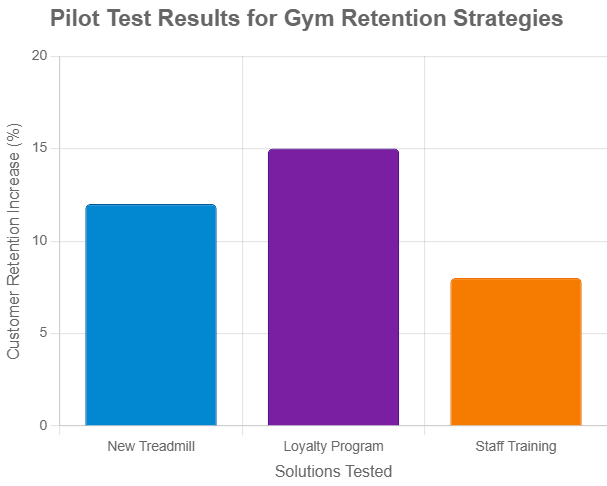
Tip: Start small. Test one or two ideas before going all-in. Track results with simple metrics, like how many customers return or how sales shift.
Step 6: Make a Call—Pick Your Play
Time to decide. Look at your tests, weigh the pros and cons, and choose the best path. For the gym, maybe the loyalty program boosted retention the most, so you roll it out chain-wide. Make your plan clear: what’s the goal, who’s doing what, and when’s it happening? Write it down like a mission brief—short, sharp, and actionable.
For example: “Launch a loyalty program offering 10% off for repeat members by June 1. Marketing team handles promos, staff tracks sign-ups, and we check results in 30 days.”
Tip: Keep it simple but specific. Share the plan with everyone involved so they know their role. It’s like calling a play in a game—everyone needs to know the move.
Step 7: Track and Tweak—Stay in the Fight
The CIA doesn’t walk away after making a call—they watch what happens and adjust. You need to do the same. Set up checkpoints to track progress. For the gym, check membership numbers weekly. If the loyalty program’s working, great—double down. If not, tweak it or try something else.
This is where growth happens. Problems don’t vanish; they evolve. Stay ready to pivot, like a boxer dodging a jab. I’ve learned this the hard way—whether it’s tweaking my golf swing or rethinking a strategy, you gotta keep moving.
Tip: Use a dashboard or app to track key numbers (sales, feedback, whatever matters). Schedule regular check-ins to stay on top of things.
Why This Works: Turning Chaos into Strength
This process isn’t just for spies—it’s for anyone who wants to turn a mess into a win. It forces you to think clearly, question your gut, and act with purpose. It’s like forging steel: the heat and pressure of a tough problem can make you stronger if you handle it right. I’ve seen it in my own life—times when I had to dig deep, face the chaos, and come out better. You can too.
For a business, this means better decisions, happier customers, and a team that’s ready for anything. For a nonprofit, it’s about stretching every dollar and making a real impact. For you personally, it’s about tackling life’s challenges with a clear head and a strong heart.
Real-World Wins: Stories from the Trenches
Let’s make it real. Picture a small coffee shop losing customers to a big chain. They use this process:
- Define: “How do we get more locals in the door?”
- Gather: They check sales data, talk to customers, and spy on the chain’s menu.
- Analyze: They realize their coffee’s great, but the vibe’s stale compared to the chain’s cozy setup.
- Options: Redecorate, add live music, or start a loyalty card.
- Test: They try a loyalty card for a month—buy 10 coffees, get one free.
- Decide: The card works, so they roll it out permanently.
- Track: They watch sales climb 15% and keep tweaking the program.
Or take a personal example: someone struggling to balance work and family. They define the problem (“How do I make time for my kids?”), gather info (their schedule, family needs), analyze (realize they’re overcommitted), test solutions (cut one meeting a week), and track the impact (more family time, less stress). It’s not rocket science—it’s just smart.
Your Turn: Make It Happen
You don’t need a CIA badge to think like this. Start small. Pick one problem—a slow month at work, a team that’s not clicking, or a personal goal you’re stuck on. Run it through these steps. Write down your question, grab some data, test an idea, and keep tweaking. It’s like building muscle: the more you do it, the stronger you get.
Problems are just opportunities in disguise. They’re the fire that forges you, the rough road that builds your grit. So grab this process, make it your own, and go tackle your next challenge like a spy on a mission. You’ve got this.
 Hoodlm's Thoughts, Reviews and How-To's